iPhone Duo Storage and Colors: 256GB, 512GB, 1TB, or 2TB?
Apple offers iPhone Duo in four storage capacities and two titanium finishes. This guide separates the official options from our buying recommendations.
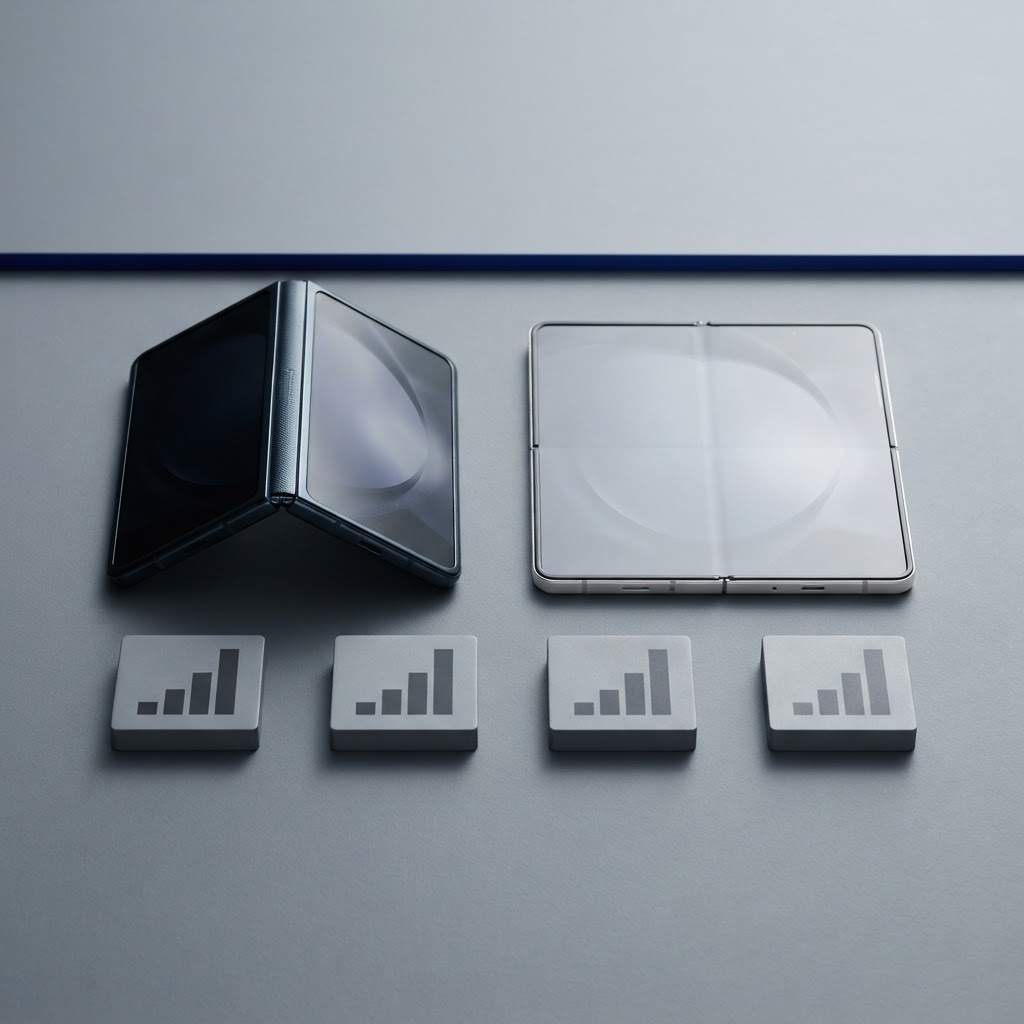
Apple offers iPhone Duo in 256GB, 512GB, 1TB, and 2TB, with Night Sky and Star White titanium finishes. Those are the confirmed choices. Picking among them depends less on the fold than on how you use cameras, games, offline media, and on-device AI.
The confirmed lineup
The official technical specifications list four storage tiers beginning at 256GB. There is no 128GB option. Apple lists two finishes: Night Sky and Star White.
Storage cannot be expanded later, so the useful question is not how much space is free on day one. It is how much local data you expect to keep after several years of 48MP photos, 4K video, downloaded media, large games, and offline files.
256GB: the sensible default
Choose 256GB if you stream most media, use iCloud Photos with Optimize Storage, keep a moderate app library, and move large video projects off the phone.
This tier should suit many buyers. It offers far more headroom than an entry-level 128GB phone and avoids paying for capacity that cloud-first users may never fill.
Check your current iPhone at Settings > General > iPhone Storage. If you are comfortably below half of 256GB after several years, the base model is a defensible choice.
512GB: the balanced upgrade
Choose 512GB if you download shows for travel, keep many large games, shoot frequent 4K video, or want room for several years without active storage management.
For a device designed around a larger inner display, offline video and games may become more attractive than they were on a conventional phone. That makes 512GB the most balanced recommendation for users who expect iPhone Duo to replace some tablet habits.
1TB: for local media workflows
Choose 1TB if iPhone Duo will be a primary capture and editing device. High-resolution photos, 4K 120 fps clips, project files, and exported versions can consume storage quickly.
This tier also makes sense for frequent travelers who cannot rely on fast uploads. It is harder to justify for someone whose largest category is replaceable streaming downloads.
2TB: specialized, not automatically future-proof
Choose 2TB for sustained professional video, very large offline libraries, or a workflow that explicitly requires local copies. It is not the default “best” model simply because it is the largest.
More capacity does not improve processor speed, camera quality, display quality, or battery life. It only reduces storage pressure. Calculate the requirement from current usage and expected capture volume rather than from fear.
A quick calculation
Take your current used storage, subtract items you plan to archive, then add expected growth for the years you keep a phone. Add a safety margin of roughly 20 to 25 percent so iOS has room for updates, caches, and temporary media processing.
If the result sits close to a tier boundary, move up one tier. If it is far below, save the money for protection, AppleCare, or accessories you will use daily.
Night Sky or Star White?
Color is personal, but maintenance differs. Night Sky may make the device look more monolithic and can pair discreetly with dark cases. Star White creates stronger contrast around the hinge and may show dark lint less readily.
Neither finish changes durability. Most owners will see more of the case than the titanium frame, so choose the phone color after deciding whether your preferred case is transparent, opaque, or folio-style.
Country and price caveat
Apple’s headline US price begins at $1,999, but storage-step pricing and availability can vary by market. Use the regional Apple Store as the final authority before budgeting. Do not copy US monthly-payment figures into a guide for another country.
Our recommendation
For most cloud-first users, 256GB is enough. For buyers who want iPhone Duo to absorb tablet-like gaming, downloads, and creative work, 512GB is the safer middle. The 1TB and 2TB models are best treated as workflow purchases: know which files require the space before paying for it.
The source-backed part is simple—four capacities, two finishes. The recommendation should remain personal, transparent, and tied to measurable usage.
Spotted something to fix, or an app we should cover?
This article is independent research, cross-checked against Apple's developer documentation. If something's out of date, or you know an app that deserves a look, let us know — and if you're building for iPhone Duo yourself, we're happy to talk.
hola@ayudantedigital.es